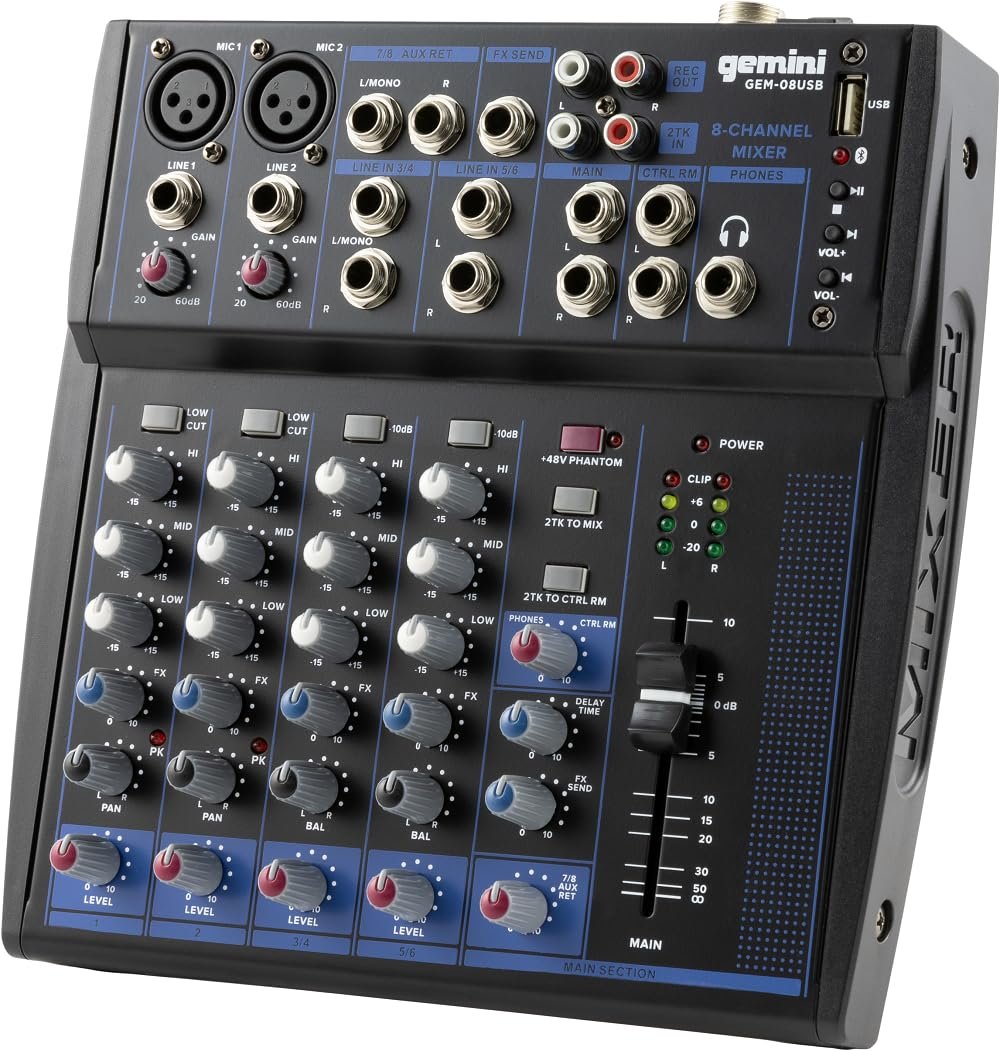
Transform your house party into an unforgettable experience with professional-grade DJ equipment designed for home entertainers and aspiring DJs. Whether you're hosting an intimate gathering of friends or throwing the neighborhood's biggest bash, having the right audio gear makes the difference between background music and an immersive party atmosphere that keeps guests dancing all night. Our curated collection features everything you need to create a complete DJ setup—from powerful PA speaker systems that deliver crystal-clear sound without distortion, to professional audio mixers that give you creative control over multiple music sources, to DJ headphones that help you cue tracks flawlessly. Each product has been selected for its combination of performance, reliability, and value, ensuring you get professional results without the professional price tag. Modern features like Bluetooth connectivity let you stream wirelessly from any device, while LED lighting effects add visual excitement that enhances the party vibe. Whether you're a beginner exploring DJing for the first time or an experienced home DJ upgrading your setup, you'll find equipment that matches your skill level and party needs. From compact 8" speakers perfect for apartment gatherings to dual 15" systems that fill backyards with 2000 watts of power, from simple Bluetooth speakers for casual listening to 8-channel mixers for complex multi-source setups—we've assembled the essential gear to make your house parties legendary.
What should you look for in house party DJ equipment?
When selecting DJ equipment for house parties, prioritize power output, connectivity options, and portability. Your speaker system should deliver at least 500-1000 watts for typical living room gatherings, with 2000W systems handling larger spaces or outdoor venues. Look for Bluetooth-enabled equipment that allows wireless streaming from smartphones and laptops, while also offering traditional inputs like XLR, RCA, and USB connections for maximum flexibility. A professional audio mixer with 4-8 channels gives you control over multiple music sources, microphones, and effects. Sound quality matters immensely—seek balanced frequency response that delivers clear highs, warm mids, and punchy bass without distortion at high volumes. Durability is equally important; equipment with rugged construction, protective grilles, and water resistance (IPX7 rating for outdoor use) ensures your investment withstands the party environment. Finally, consider setup simplicity and portability features like built-in handles, lightweight designs, and quick-connect systems that let you focus on entertaining rather than technical troubleshooting.
Frequently Asked Questions
What equipment do house DJs use?
House party DJs typically use a core setup consisting of PA speakers (powered or passive systems ranging from 500W to 2000W), an audio mixer (4-8 channels for controlling multiple sources), and professional DJ headphones for cueing tracks. Modern setups often include Bluetooth-enabled speakers and mixers that connect wirelessly to laptops, smartphones, or tablets running DJ software like Serato, Traktor, or Rekordbox. Many DJs also incorporate portable Bluetooth speakers for pre-party ambiance or smaller spaces. Essential accessories include quality cables (XLR, RCA, 1/4" TRS), microphones for announcements or karaoke, and speaker stands for optimal sound projection. For enhanced atmosphere, LED-equipped speakers like the Gemini AS-08BLU-LT add visual excitement. The specific equipment scales based on party size—intimate gatherings of 15-30 people work well with single 8-10" powered speakers, while larger house parties with 50+ guests require dual speaker systems with higher wattage output. Professional mixers with USB connectivity allow direct laptop connection, while Bluetooth options provide wireless convenience for casual playlists between DJ sets.
How much do DJs charge for a house party?
House party DJ rates vary significantly based on experience level, location, event duration, and equipment provided. Beginner or hobbyist DJs typically charge $100-$300 for 2-4 hours, making them ideal for casual birthday parties or small gatherings. Intermediate DJs with professional equipment and 2-5 years of experience generally charge $300-$600 for similar timeframes. Professional DJs with established reputations, extensive music libraries, and premium sound systems command $600-$1,500+ for house parties, especially for milestone events like graduation parties, engagement celebrations, or upscale gatherings. Geographic location significantly impacts pricing—DJs in major metropolitan areas charge 30-50% more than those in smaller cities. Additional factors affecting cost include travel distance (many charge mileage fees beyond 25-50 miles), equipment complexity (lighting packages, fog machines, or microphones add $100-$300), event duration (hourly rates decrease slightly for longer bookings), and timing (weekend evenings and holidays command premium rates). Many DJs offer package deals that include consultation, custom playlists, and basic MC services. For those considering DIY options, investing $500-$1,500 in quality equipment pays for itself after just 2-3 events compared to hiring professionals repeatedly.
How many songs for a 2 hour DJ set?
A typical 2-hour DJ set requires approximately 30-40 songs, though the exact number varies based on music genre, mixing style, and crowd energy. This calculation assumes average song lengths of 3-4 minutes with seamless transitions. House and electronic DJs often play 25-35 tracks during 2 hours because dance music tracks run longer (4-6 minutes) and feature extended mixes with longer intros and outros designed for smooth beatmatching. Hip-hop and pop DJs might play 35-45 songs since these genres typically feature shorter tracks (2.5-3.5 minutes) and quicker transitions. The actual number fluctuates based on your mixing technique—DJs who perform quick cuts and mashups cycle through more tracks, while those creating long blends with extended transitions play fewer songs. Experienced DJs prepare 50-60 songs for a 2-hour set, providing 50-100% more music than needed. This buffer accommodates crowd requests, energy shifts, and unexpected situations like needing to extend or shorten your set. Organize your prepared tracks into energy levels (warm-up, peak-time, cool-down) and genres to adapt quickly to the room's vibe. Most professional DJs also maintain separate playlists for different party phases and have emergency crowd-pleasers ready for when energy dips unexpectedly.
What do I need for a home DJ setup?
A complete home DJ setup for house parties requires five essential components: speakers, mixer, music source, headphones, and cables. Start with powered PA speakers—a single 8-10" speaker (500-1000W) works for practice and small gatherings, while dual speakers handle full parties. Your mixer should have 4-8 channels with Bluetooth connectivity and USB input, allowing control over multiple music sources simultaneously. For music sources, options include a laptop running DJ software (Serato DJ Lite is free), a DJ controller with integrated mixing controls, or simply a smartphone/tablet with curated playlists for simpler setups. Professional DJ headphones with closed-back design and swiveling ear cups enable accurate cueing and beat matching without sound bleed. Quality cables—XLR or 1/4" TRS for speakers, RCA for auxiliary connections—ensure reliable signal transmission. Beyond basics, consider these upgrades: speaker stands position sound at ear level for better coverage, a microphone with cable enables announcements or karaoke, LED lighting adds atmosphere, and a portable backup speaker provides redundancy. For beginners, expect to invest $500-$800 for entry-level equipment or $1,200-$2,500 for professional-grade gear. Prioritize speakers and mixer quality over quantity—excellent sound from modest equipment impresses more than poor sound from expensive gear. Many DJs start with powered speakers and a simple mixer, then gradually add controllers, lighting, and additional speakers as skills and party sizes grow.
Do I need professional DJ headphones for house parties?
While not absolutely mandatory for basic playlist DJing, professional DJ headphones become essential when performing live mixing, beatmatching, or transitioning between tracks. Quality DJ headphones like the DJX-03 allow you to preview (cue) the next track privately while the current song plays through speakers, ensuring smooth transitions without awkward silence or mismatched beats. The closed-back design isolates sound, letting you hear subtle details even in loud party environments where speaker output exceeds 95-100 decibels. Balanced sound reproduction across frequencies helps you make accurate EQ adjustments and identify when tracks are properly synced. Comfort matters significantly during 2-4 hour sets—padded ear cups, adjustable headbands, and swiveling mechanisms prevent fatigue and allow single-ear monitoring while maintaining crowd awareness. Professional headphones also feature durable construction with reinforced cables and replaceable parts, withstanding the physical demands of regular use, transportation, and occasional drops. For simple Spotify playlist parties without live mixing, quality consumer headphones or even smartphone speakers suffice for pre-selecting songs. However, if you're learning DJ skills, performing beat-matched transitions, or taking requests that require quick track selection and cueing, investing $50-$150 in proper DJ headphones dramatically improves your performance quality and confidence. The ability to preview tracks professionally separates amateur playlist operators from skilled DJs who read and respond to crowd energy in real-time.